The Hidden Productivity Loss No One Tracks: How Equipment Handoffs Between Crews Are Slowing Construction Projects
Table of Contents:
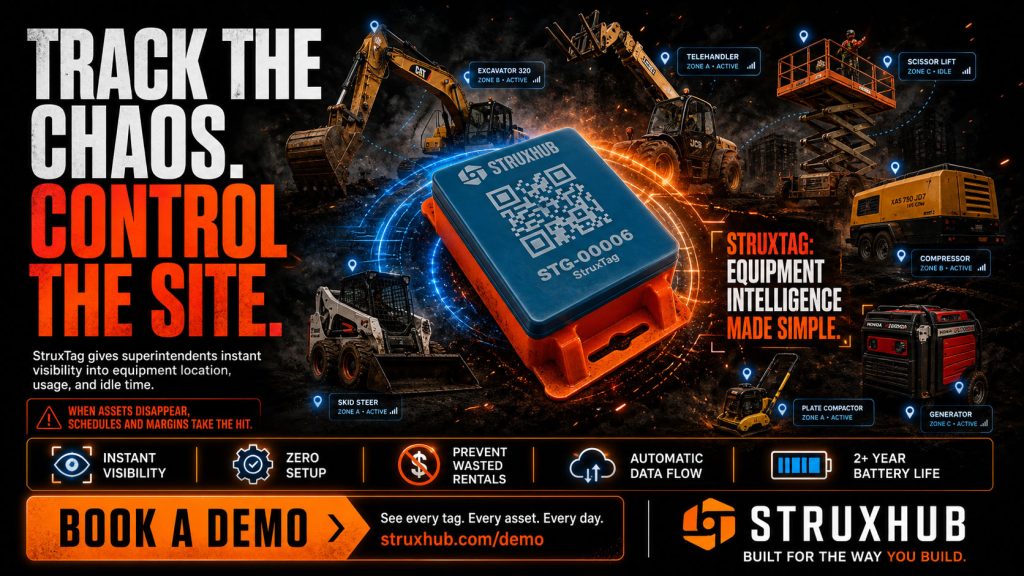
On most construction projects, productivity loss is blamed on weather, labor shortages, or late deliveries. Rarely does anyone point to equipment handoffs as the real culprit. Yet every superintendent has seen it happen. One crew finishes a task and another is ready to start, but the equipment they need is tied up, misplaced, or sitting in the wrong zone. The project schedule looks fine on paper, but work slows down anyway.
This type of delay is difficult to measure because it hides in small moments. Crews wait ten minutes here, fifteen minutes there, while tools are located or responsibilities are clarified. Over the course of a week, those small delays compound into lost hours and missed milestones. Because handoffs are informal and rarely tracked, the problem often goes unnoticed in reports and meetings.
In this article, we examine why equipment handoffs between crews create hidden productivity loss, why traditional tracking methods fail to catch it, and how experienced superintendents are fixing the issue with clearer ownership, real-time visibility, and smarter workflows.
Why Equipment Handoffs Create Invisible Downtime
Equipment handoffs usually happen during transitions. One trade finishes, another is scheduled to begin, and the same tools or machines must be reused. In theory, the equipment is available. In practice, it often is not. Crews may not know where the equipment was staged, whether it was returned, or who is responsible for releasing it.
This uncertainty causes immediate slowdowns. Crews hesitate to start work, supervisors make calls to track down assets, and equipment that is technically on site becomes operationally unavailable. Because these delays do not show up as formal stoppages, they are rarely reported as productivity issues. They simply become part of the day.
Superintendents who observe this closely realize that handoff delays are not random. They follow predictable patterns tied to unclear responsibility, lack of real-time status updates, and informal release processes. Without a system that tracks handoffs explicitly, these losses remain hidden and unaddressed.
Top Benefits of Addressing Handoffs
- Reduces idle time during trade transitions
- Keeps crews starting work on schedule
- Improves overall jobsite flow without adding labor
Best Practices
- Define clear release and receive steps for shared equipment
- Require quick confirmation when equipment changes hands
- Make handoff status visible to both outgoing and incoming crews
Q&A Mini Section
Q: Why do handoff delays rarely appear in reports?
A: They happen in small increments that are absorbed into the day rather than logged as stoppages.
Q: Are handoff issues more common on larger projects?
A: Yes. More crews and shared equipment increase transition complexity.
Q: Does adding more equipment solve handoff delays?
A: No. Without clear handoff processes, more equipment often increases confusion.
When handoffs are unmanaged, productivity loss hides in plain sight.
Why Traditional Tracking Systems Miss the Handoff Problem
Most equipment tracking systems focus on location or inventory counts. They answer questions like where is the equipment and how many units are on site. What they do not track is responsibility during transitions. When equipment is marked as present but no crew is clearly accountable, the system shows availability even though crews cannot access it.
Spreadsheets and paper logs are especially weak here. They rely on delayed updates and informal communication. Even digital systems often fail because they treat equipment as static assets rather than shared resources that move rapidly between crews. The moment between one crew finishing and another starting is where the data gap appears.
Superintendents often compensate by walking the site, calling foremen, or delaying work until things are sorted out. This manual intervention keeps projects moving but hides the root problem. Tracking systems that do not capture handoff events leave superintendents reacting instead of managing proactively.
Top Benefits of Improving Handoff Visibility
- Prevents equipment from being marked available when it is not
- Reduces time spent calling or searching for assets
- Improves schedule reliability during trade transitions
Best Practices
- Track responsibility in addition to location
- Log handoff events explicitly, not just equipment presence
- Surface handoff status in live dashboards
Q&A Mini Section
Q: Why is location tracking alone not enough?
A: Knowing where something is does not tell you who controls it or when it is released.
Q: Do digital systems automatically solve this problem?
A: No. Systems must be designed to capture handoffs explicitly.
Q: How do superintendents usually discover handoff issues?
A: When crews are waiting even though equipment shows as available.
Handoff failures are a data problem disguised as a coordination problem.
Related Articles:

How Top Superintendents Make Equipment Handoffs Visible and Predictable
Experienced superintendents approach equipment handoffs as a workflow, not an afterthought. They recognize that every shared asset needs a clear transition point. Instead of assuming equipment will be returned on time, they build simple release and receive steps into daily operations.
These leaders rely on systems that require quick confirmation when equipment changes hands. Responsibility is assigned temporarily so there is always a clear owner. Incoming crews can see in real time whether equipment is ready, delayed, or still in use. This removes uncertainty and allows schedules to remain realistic.
By making handoffs visible, superintendents reduce friction without adding complexity. Crews spend less time waiting and more time working. Over time, these small improvements translate into measurable productivity gains across the project.
Superintendents can eliminate these hidden delays by adopting a top construction equipment tracking software that prioritizes real-time handoff confirmations and clear accountability
Top Benefits
- Keeps transitions between crews smooth and predictable
- Reduces manual intervention by superintendents
- Improves trust between trades and field leadership
Best Practices
- Treat handoffs as formal workflow steps
- Assign responsibility during transitions, even briefly
- Review handoff delays weekly to identify patterns
Q&A Mini Section
Q: Does formalizing handoffs slow crews down?
A: No. Clear transitions reduce delays and speed up starts.
Q: Can this work across subcontractors?
A: Yes. Role-based responsibility works even in shared environments.
Q: How quickly do crews adapt to clearer handoffs?
A: Usually within days once expectations are consistent.
When handoffs are predictable, productivity stops leaking out of the schedule.

Automation Turns Equipment Handoffs Into Reliable Transitions
One reason equipment handoffs fail is that they depend on memory and good intentions. Crews get busy, priorities shift, and tools are left where they were last used. Automation removes this uncertainty by capturing handoff activity the moment it happens. Instead of relying on someone to remember to update a log, the system records the transition automatically.
When a crew finishes using equipment, automation can require a quick release confirmation. When the next crew takes over, acceptance is logged instantly. This creates a clear, time-stamped transition that eliminates ambiguity. Superintendents no longer need to step in to confirm who is responsible. The system already knows.
Automation also flags incomplete handoffs. If equipment is not released on time or remains assigned past its scheduled window, alerts notify the superintendent before crews start waiting. This proactive signal allows adjustments to be made early, keeping work moving without friction.
Top Benefits
- Removes reliance on memory during busy transitions
- Creates clear, time-stamped handoff records
- Prevents delays caused by incomplete releases
Best Practices
- Automate release and receive confirmations for shared equipment
- Set alerts for overdue or stalled handoffs
- Review handoff exceptions daily rather than after delays occur
Q&A Mini Section
Q: Does automation add steps for crews?
A: No. Simple confirmations replace longer delays and confusion.
Q: Can automation work on fast-paced sites?
A: Yes. It is designed to capture activity instantly without slowing work.
Q: Does this reduce superintendent intervention?
A: Significantly. Most issues are resolved before crews start waiting.
Automation transforms handoffs from informal assumptions into dependable transitions.

StruxHub
Experience the power of StruxHub today and witness firsthand how it can revolutionize your construction operations.
Real-Time Alerts Expose Bottlenecks Before Crews Start Waiting
Most handoff delays are discovered too late. A crew is ready to start, but the equipment is still tied up or misplaced. By then, productivity is already lost. Real-time alerts shift discovery earlier in the process.
When equipment remains assigned longer than expected, leaves a work zone, or is not released on schedule, the system sends an alert. Superintendents can see the issue developing and take action before it turns into downtime. This might mean redirecting a crew, adjusting a sequence, or locating an alternate asset.
Real-time alerts also change behavior. When crews know handoffs are visible, releases happen on time. The system becomes a shared reference point rather than a policing tool. Over time, handoff discipline improves naturally.
Top Benefits
- Identifies handoff bottlenecks early
- Reduces reactive firefighting by superintendents
- Keeps schedules realistic during transitions
Best Practices
- Configure alerts based on expected handoff windows
- Use alerts to prompt action, not blame
- Review alert trends weekly to improve planning
Q&A Mini Section
Q: Do alerts overwhelm superintendents?
A: No. Well-configured alerts focus only on exceptions.
Q: Can alerts be role-specific?
A: Yes. Foremen and leads can receive targeted notifications.
Q: How fast do alerts trigger?
A: Immediately when conditions deviate from plan.
Alerts make invisible delays visible while there is still time to respond.

StruxHub: Revolutionizing Project Management in Large Commercial Construction
Accountability Models Reduce Friction Between Crews
Handoffs often create tension between trades. One crew believes they returned equipment. Another believes it was never released. Without clear data, these disputes slow work and erode trust. Accountability models built into tracking systems eliminate this friction.
By assigning temporary responsibility during handoffs, equipment always has a clear owner. The outgoing crew is responsible until release is confirmed. The incoming crew becomes responsible once acceptance is logged. This removes ambiguity without requiring confrontation.
Shared visibility reinforces this model. Both crews can see the same status in real time. When responsibility is clear, cooperation improves and delays decrease.
Top Benefits
- Eliminates disputes over equipment availability
- Improves trust between crews and trades
- Encourages timely releases and pickups
Best Practices
- Assign responsibility explicitly during transitions
- Share handoff status with both crews
- Review recurring responsibility issues to improve workflows
Q&A Mini Section
Q: Does accountability create blame culture?
A: No. It creates clarity, which reduces conflict.
Q: Can this work with subcontractors?
A: Yes. Role-based responsibility works across companies.
Q: Does accountability slow handoffs?
A: No. Clear ownership speeds them up.
Clear accountability keeps equipment moving without friction.
How StruxHub Fixes the Handoff Gaps That Slow Construction Projects
StruxHub was designed to solve exactly the kind of hidden productivity loss that equipment handoffs create. Instead of only tracking location, StruxHub tracks responsibility, timing, and readiness. This ensures equipment is not just on site, but available when the next crew needs it.
The platform automates release and receive steps, logs transitions in real time, and highlights stalled handoffs before they become delays. Superintendents see only what requires attention, not every movement. Crews work with clear expectations and minimal disruption.
StruxHub serves as a top construction equipment tracking system by focusing on the ‘readiness’ of assets rather than just their physical coordinates on a GPS map.
StruxHub also integrates handoff data into daily planning and reporting. Over time, superintendents can see where handoffs regularly slow projects and adjust sequencing accordingly. What was once invisible becomes measurable and fixable.
Top Benefits
- Makes handoffs visible and predictable
- Prevents downtime during crew transitions
- Turns tracking data into actionable insight
Best Practices
- Use StruxHub dashboards during daily planning
- Enable alerts for delayed or incomplete handoffs
- Review handoff patterns weekly to improve flow
Q&A Mini Section
Q: How does StruxHub differ from basic tracking tools?
A: It tracks responsibility and timing, not just location.
Q: Can StruxHub reduce idle time between trades?
A: Yes. It exposes delays early so adjustments happen before crews wait.
Q: Is StruxHub difficult to roll out?
A: No. Most teams adopt it quickly because it fits natural workflows.
StruxHub helps superintendents stop hidden productivity loss by fixing the handoff gaps that traditional tracking systems ignore.

FAQ: Equipment Handoffs, Hidden Downtime, and Jobsite Productivity
1. Why do equipment handoffs cause so much hidden productivity loss on construction projects?
Equipment handoffs usually happen during transitions, not during planned activities. One crew finishes work, another is scheduled to start, and equipment is assumed to be ready. In reality, tools may still be staged in the previous work area, checked out to another crew, or waiting on informal approval to be released. Because these delays happen in short increments, they rarely get logged as downtime. Crews wait quietly, supervisors make quick calls, and the schedule absorbs the loss. Over time, these small delays compound into significant productivity erosion that never appears in reports. Without explicit tracking of handoffs, projects lose hours without realizing where they went.
2. Why do traditional tracking systems fail to capture handoff delays?
Most tracking systems focus on presence, not readiness. They show that equipment is on site but not whether it is available, released, or assigned to a different crew. Paper logs and spreadsheets rely on delayed updates, while many digital tools track location without tracking responsibility. The moment between release and acceptance is where the data gap exists. Without tracking responsibility and timing, the system reports availability even when crews cannot access the equipment. This forces superintendents to intervene manually and hides the root cause of delays.
3. How does tracking responsibility change how crews interact with shared equipment?
When responsibility is clear, behavior changes naturally. Crews return equipment on time because ownership is visible. Incoming crews can see whether assets are ready instead of guessing. Accountability removes tension because disputes are replaced with facts. Instead of arguing about who had the tool last, the system shows exactly when responsibility changed hands. This clarity reduces friction between trades, improves trust, and keeps equipment flowing without constant supervision.
4. Can equipment handoff tracking actually improve schedules without adding complexity?
Yes. Effective handoff tracking is not about adding paperwork. It is about capturing transitions automatically or with simple confirmations. When release and receive steps are built into normal workflows, handoffs become predictable instead of chaotic. Real-time alerts surface problems early, allowing superintendents to adjust sequencing before crews wait. Over time, patterns emerge that allow better planning and sequencing across phases. The result is smoother transitions, fewer interruptions, and schedules that reflect how work actually flows on site.
5. How does StruxHub specifically help superintendents eliminate handoff-driven downtime?
StruxHub was designed to track not just where equipment is, but whether it is ready and who is responsible. It automates handoff events, records timing, and highlights stalled transitions in real time. Superintendents see exceptions instead of raw data, allowing quick action before productivity is lost. Shared visibility ensures both outgoing and incoming crews see the same status, reducing confusion. Over time, StruxHub turns invisible delays into measurable data that can be fixed through better sequencing and coordination.
Success on a complex site isn’t just about hard work; it’s about leveraging a top construction equipment tracking system to meet the rigorous demands of today’s infrastructure projects. To ensure your logistics and safety protocols are up to date, consult these high-authority industry bodies:
• buildingSMART Interoperability
• OSHA Safety Management• CII Best Practices