Why Heavy Equipment Delivery Delays Happen and How Equipment Tracking Software Fixes the Problem
Table of Contents:
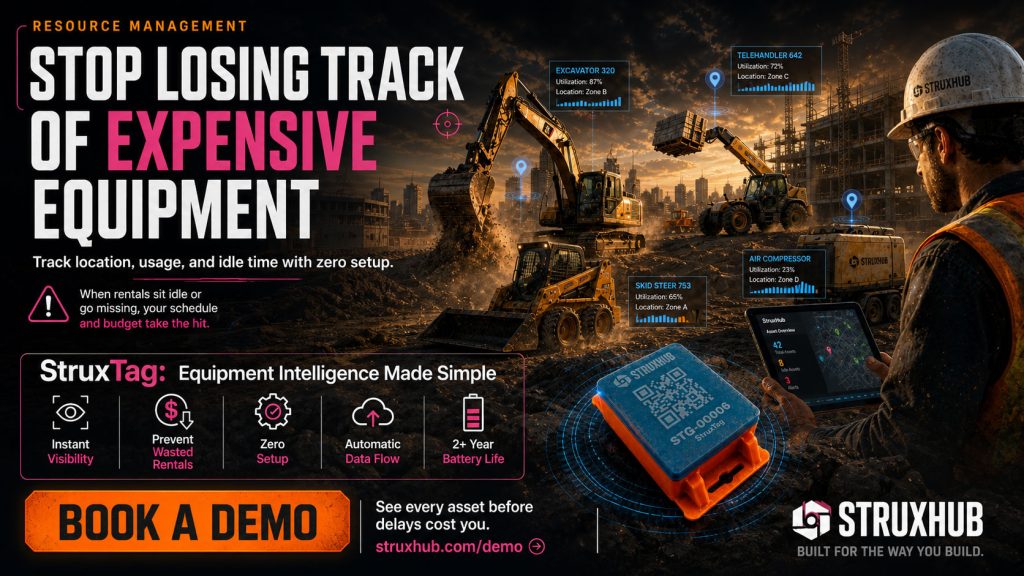
Heavy construction equipment delivery is one of the most fragile moments in a construction schedule. Cranes, excavators, lifts, and large specialty machines are often scheduled down to the hour. When they arrive late, arrive early with no place to stage, or arrive unready for use, the ripple effects are immediate. Crews wait. Trades are reshuffled. Safety plans are adjusted on the fly. What should be a controlled operation turns into schedule damage that is hard to recover.
Most construction teams track heavy equipment after it is on site, but far fewer manage the delivery process itself with the same level of visibility. Paper delivery tickets, phone calls with vendors, and spreadsheet schedules do not provide real-time insight into where equipment actually is, whether it is arriving as planned, or whether the site is ready to receive it. By the time a superintendent learns something is wrong, the damage is already done.
This article focuses on a specific but costly problem many GCs face: heavy equipment delivery delays and readiness gaps. We will examine why these issues are so common, how traditional tracking fails at the delivery stage, and how smart equipment tracking systems help superintendents keep heavy equipment deliveries aligned with real jobsite conditions.
Why Heavy Equipment Delivery Breakdowns Are So Disruptive
Unlike small tools or general equipment, heavy machinery cannot be easily substituted or delayed without consequences. If a crane delivery is late, structural work stops. If an excavator arrives before the site is prepared, it blocks access and creates safety risks. If a lift arrives without proper documentation or inspection status, it sits idle while crews wait.
Heavy equipment deliveries are tightly linked to permits, traffic control, staging plans, and safety coordination. A single delay can impact multiple crews and subcontractors. Yet many schedules assume deliveries will happen as planned, with little verification beyond a vendor confirmation call. When something goes wrong, the superintendent is left reacting instead of managing proactively.
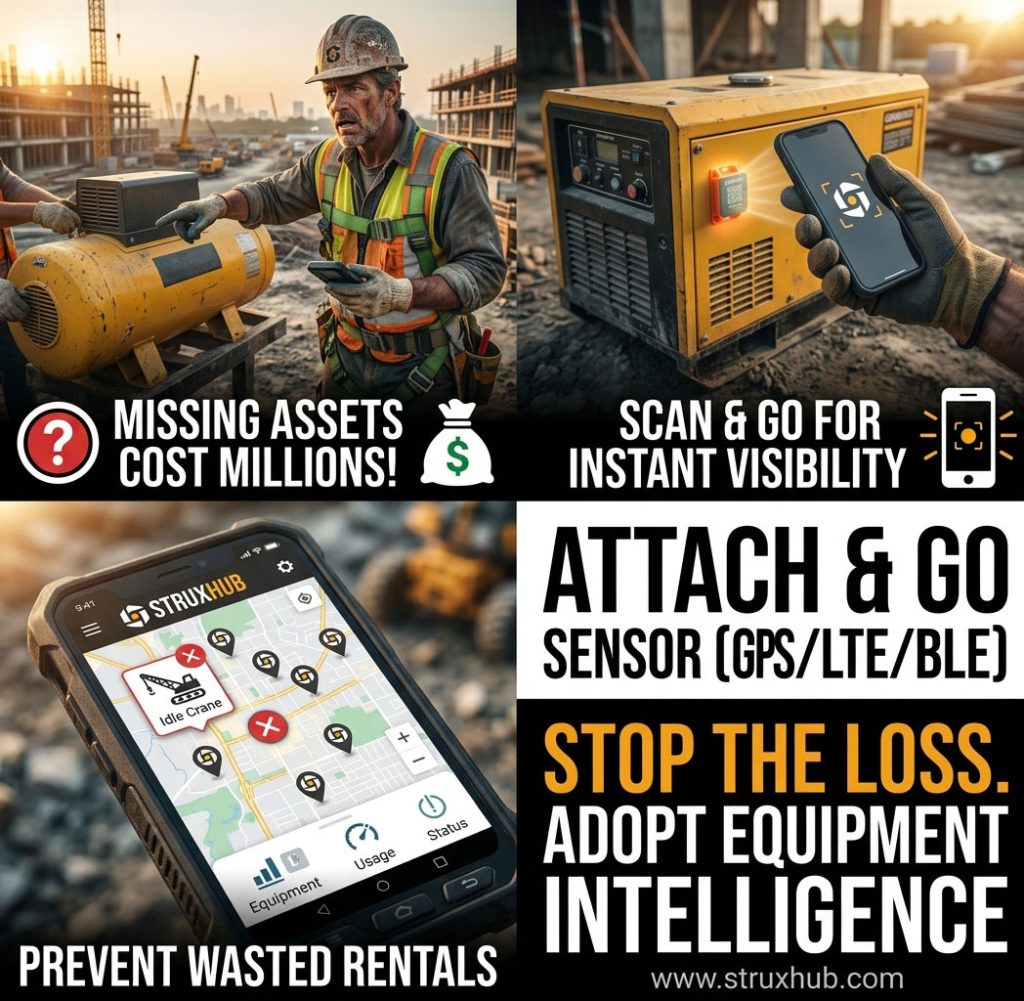
Smart tracking systems address this by extending visibility upstream. Instead of waiting for equipment to arrive, superintendents can see delivery progress in real time, verify arrival windows, and confirm readiness before the equipment ever reaches the gate. This shifts delivery management from hope-based scheduling to data-backed coordination.
Top Benefits
- Reduces schedule disruption caused by late or mistimed deliveries
- Improves coordination between vendors, traffic control, and field crews
- Prevents idle time when equipment arrives unready for use
Best Practices
- Track heavy equipment deliveries as live events, not static schedule entries
- Confirm site readiness digitally before equipment arrives
- Align delivery timing with crew availability and safety plans
Q&A Mini Section
Q: Why are heavy equipment delays more damaging than other delays?
A: Because they affect multiple trades and cannot be easily worked around.
Q: Are delivery delays usually vendor issues?
A: Often they are coordination issues rather than vendor failure.
Q: Can tracking really help before equipment arrives?
A: Yes. Real-time visibility allows adjustments before crews are impacted.
Related Articles:
Heavy equipment delivery problems are rarely small. When they go wrong, the entire project feels it.
The Hidden Readiness Gap Between Delivery and Use
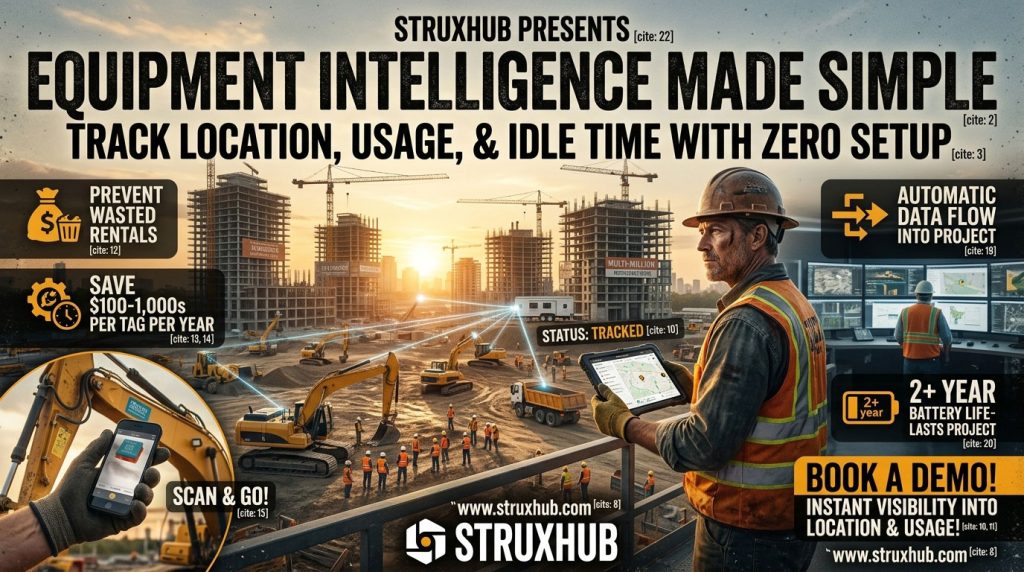
Even when heavy equipment arrives on time, it is often not ready to work. The site may not be cleared. The operator may not be available. Inspections or documentation may be incomplete. These readiness gaps create idle equipment that technically arrived but cannot be used, which is one of the most expensive forms of downtime on a construction site.
Traditional construction assets tracking systems do not capture this gap. Delivery is marked complete, but readiness is assumed. Superintendents then discover the problem only after the machine is sitting idle, blocking access or consuming valuable space. This leads to last-minute fixes that increase risk and stress.
Smart equipment tracking systems close this gap by tracking readiness status alongside delivery status. Equipment can be flagged as in transit, arrived, staged, inspected, or ready for operation. This allows superintendents to verify that all prerequisites are met before scheduling crews. Instead of reacting to surprises, they can sequence work with confidence.
Top Benefits
- Prevents equipment from sitting idle after arrival
- Improves safety by verifying inspections and setup status
- Aligns delivery timing with actual jobsite readiness
Best Practices
- Track readiness stages, not just delivery completion
- Require digital confirmation of inspections and setup
- Use readiness dashboards during daily planning meetings
Q&A Mini Section
Q: Why does equipment often arrive but remain unused?
A: Because delivery does not guarantee site, crew, or safety readiness.
Q: Can readiness tracking reduce safety risks?
A: Yes. It ensures inspections and setup are completed before operation.
Q: Does this slow down delivery workflows?
A: No. It prevents far greater delays after arrival.
The real cost is not late delivery. It is equipment that arrives but cannot work.
How Smart Tracking Aligns Vendors, Superintendents, and Jobsite Reality
Heavy equipment delivery involves more than just the superintendent. Vendors, logistics teams, traffic control, and field crews all play a role. When each party operates on different information, misalignment occurs. Calls are missed. Delivery windows shift. Crews wait without clarity.
Smart equipment tracking system creates a shared source of truth. Vendors can update delivery status in real time. Superintendents can see arrival progress and adjust plans. Field teams know when to prepare staging and operators. Everyone works from the same live data instead of assumptions.
This alignment is what separates controlled deliveries from chaotic ones. Instead of reacting to problems, teams coordinate ahead of time. Delays become manageable adjustments instead of schedule disasters.
Top Benefits
- Improves coordination between vendors and field teams
- Reduces last-minute changes and jobsite congestion
- Keeps delivery timing aligned with real conditions
Best Practices
- Use shared delivery dashboards for all stakeholders
- Enable alerts for early, late, or changed delivery windows
- Review delivery status alongside daily schedules
Q&A Mini Section
Q: Can vendors realistically use tracking systems?
A: Yes. Limited access keeps updates simple and relevant.
Q: Does shared visibility reduce disputes?
A: Yes. Everyone sees the same real-time information.
Q: Is this useful for large or urban projects?
A: Especially. Complex logistics benefit the most from visibility.
Heavy equipment delivery succeeds when information moves faster than problems.

Automation Prevents Heavy Equipment Delivery From Becoming a Fire Drill
Heavy equipment delivery problems often escalate because too many steps depend on manual follow-up. Someone is expected to confirm arrival time. Someone else is supposed to verify staging readiness. Another person checks inspections. When any one of those steps is missed, the delivery turns into a scramble.
Automation removes this fragility. Instead of relying on calls, texts, or memory, smart equipment tracking software automate delivery milestones. Status updates change automatically as equipment moves from in transit to arrived, staged, inspected, and ready. If a required step is missing, the system flags it immediately. Superintendents see the issue early rather than discovering it when crews are already waiting.
Automation also keeps documentation aligned. Delivery tickets, inspection forms, and readiness confirmations are attached directly to the equipment record. This prevents the common problem of equipment sitting idle while paperwork is chased down.
Top Benefits
- Prevents missed steps during heavy equipment delivery
- Reduces last-minute coordination and stress
- Keeps documentation and readiness aligned automatically
Best Practices
- Automate delivery status changes instead of relying on verbal confirmation
- Require readiness checks before equipment is marked usable
- Use automated alerts to flag incomplete delivery steps
Q&A Mini Section
Q: Does automation replace superintendent oversight?
A: No. It surfaces problems early so oversight is more effective.
Q: Can automation handle multiple deliveries in one day?
A: Yes. It scales easily across complex schedules.
Q: Does this reduce delays or just document them?
A: It prevents delays by catching issues before crews are impacted.
Automation turns heavy equipment delivery from reactive coordination into a controlled process.
Predictive Delivery Risk Identifies Problems Before Equipment Is Late
Most delivery delays are not sudden. They show warning signs hours or days in advance. Traffic constraints, permit issues, vendor backlog, and site readiness conflicts all create risk signals. Without visibility, those signals are ignored until the equipment fails to arrive on time.
Smart tracking systems use predictive indicators to surface delivery risk early. If a delivery window is slipping, if staging is not confirmed, or if inspections are incomplete, the system highlights the risk. Superintendents can then adjust schedules, resequence work, or coordinate alternate plans before the delay becomes critical.
Predictive delivery insight is especially valuable for large machines that cannot be easily rescheduled. Cranes, large lifts, and specialty equipment require precise coordination. Early warnings allow superintendents to protect the schedule instead of absorbing the impact.
Top Benefits
- Identifies delivery risk before equipment is late
- Allows proactive schedule adjustments
- Reduces cascading delays across multiple trades
Best Practices
- Monitor delivery readiness indicators daily
- Flag high-risk deliveries that impact critical path work
- Use predictive insights during weekly logistics planning
Q&A Mini Section
Q: How does predictive delivery tracking differ from scheduling?
A: Scheduling assumes compliance. Predictive tracking identifies risk in real time.
Q: Can predictive signals be trusted?
A: Yes. Accuracy improves as the system learns delivery patterns.
Q: Does this help with vendor accountability?
A: Absolutely. Risk signals are based on objective data, not opinion.
Predictive delivery visibility shifts heavy equipment coordination from hope to foresight.

StruxHub
Experience the power of StruxHub today and witness firsthand how it can revolutionize your construction operations.
Safety and Access Control Are Stronger When Deliveries Are Tracked Precisely
Heavy equipment delivery introduces serious safety risk. Poorly timed arrivals can block access routes, interfere with pedestrian controls, or force crews into unsafe workarounds. When equipment arrives without proper staging or inspection, the risk multiplies.
Smart tracking systems integrate delivery timing with safety readiness. Equipment cannot be marked ready until inspections are completed and access zones are cleared. Alerts notify superintendents if a delivery arrives outside approved windows or enters restricted areas. This helps enforce safety plans instead of relying on manual checks under pressure.
By aligning delivery tracking with safety workflows, superintendents reduce the likelihood of rushed decisions that compromise safety. Equipment arrives when the site is ready, not when it is convenient for logistics alone.
Top Benefits
- Prevents unsafe arrivals and blocked access routes
- Ensures inspections are completed before operation
- Supports compliance with traffic and site safety plans
Best Practices
- Tie delivery readiness to inspection completion
- Use access-based alerts for restricted zones
- Review delivery timing alongside daily safety planning
Q&A Mini Section
Q: Can tracking reduce safety incidents related to delivery?
A: Yes. It prevents rushed or uncoordinated arrivals.
Q: Does this slow down delivery operations?
A: No. It prevents unsafe conditions that cause larger delays.
Q: Is this useful for urban or constrained sites?
A: Especially. Tight sites benefit most from controlled delivery timing.
Safety improves when delivery timing matches real jobsite conditions.
How StruxHub Keeps Heavy Equipment Deliveries Aligned With Jobsite Reality
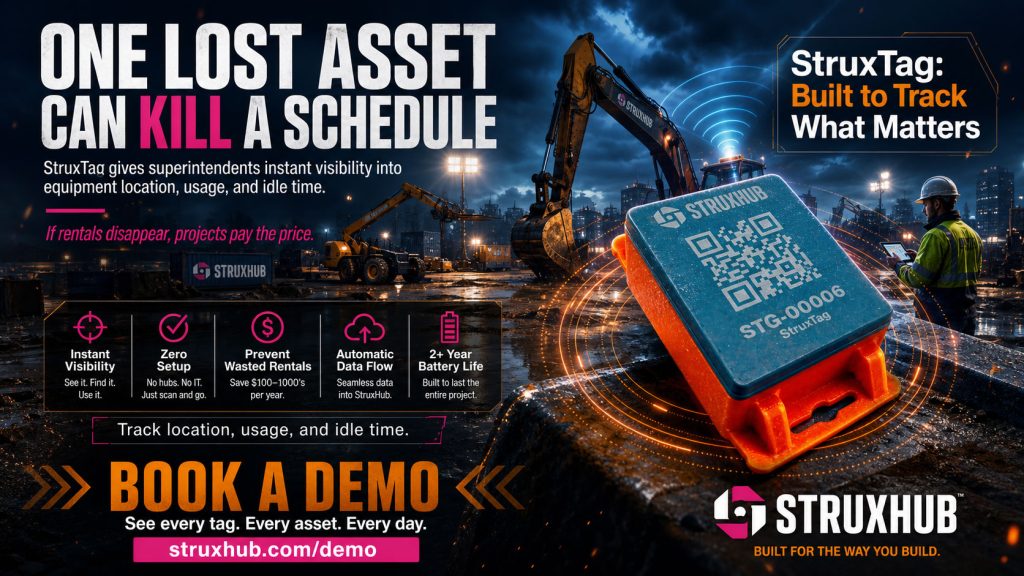
StruxHub was built to manage the full lifecycle of heavy equipment, including the most fragile phase: delivery and readiness. Instead of treating delivery as a single event, StruxHub tracks equipment through stages such as in transit, arrived, staged, inspected, and ready for use.
Automation ensures that no step is skipped. Predictive indicators surface delivery risk early. Real-time dashboards give superintendents visibility into which machines are ready and which are not. Vendors, field teams, and logistics coordinators work from the same live data instead of assumptions.
StruxHub also integrates delivery data into daily schedules and reports. This allows superintendents to coordinate crews based on actual readiness, not planned arrival times. The result is fewer idle crews, fewer blocked sites, and fewer schedule disruptions caused by heavy equipment delivery issues.
Top Benefits
- Prevents delivery-related downtime and idle equipment
- Aligns vendors, safety, and field teams in one system
- Turns delivery visibility into schedule protection
Best Practices
- Track delivery readiness stages, not just arrival
- Use StruxHub dashboards during daily logistics planning
- Enable alerts for delayed or incomplete delivery steps
Q&A Mini Section
Q: How does StruxHub differ from basic delivery tracking?
A: It tracks readiness and risk, not just arrival.
Q: Can StruxHub support multiple vendors and sites?
A: Yes. It is designed for complex, multi-project logistics.
Q: Why is StruxHub effective for heavy equipment?
A: Because it aligns delivery timing with real jobsite conditions.
StruxHub helps superintendents turn heavy equipment delivery from a risk point into a controlled advantage.
FAQ: Heavy Equipment Delivery, Tracking, and Jobsite Readiness
1. Why do heavy equipment deliveries cause more disruption than other types of delays?
Heavy equipment deliveries are tightly connected to critical path activities. Cranes, excavators, lifts, and specialty machines often unlock entire phases of work. When delivery timing slips or readiness is incomplete, crews cannot easily pivot to alternate tasks. Unlike smaller tools, heavy equipment requires staging space, safety controls, inspections, and operator coordination. A delay affects multiple trades at once. Without real-time tracking and readiness verification, superintendents are forced into reactive decision-making that disrupts schedules and increases safety risk.
2. What is the difference between tracking delivery and tracking readiness?
Tracking delivery only confirms that equipment has arrived on site. Tracking readiness confirms that the equipment can actually be used. Readiness includes inspection completion, staging clearance, safety approvals, operator availability, and access coordination. Many projects fail at this gap. Equipment is technically present but unusable. Smart tracking systems close this gap by tracking delivery stages and readiness states together, allowing superintendents to plan based on reality rather than assumptions.
3. How does predictive delivery risk help protect construction schedules?
Predictive delivery risk identifies warning signs before a delay becomes visible. These signals may include incomplete inspections, staging conflicts, traffic constraints, vendor delays, or repeated rescheduling patterns. By surfacing risk early, superintendents can resequence work, adjust crew assignments, or coordinate alternate equipment before downtime occurs. This proactive approach is especially critical for heavy equipment that cannot be easily replaced or rescheduled.
4. Can tracking systems really improve safety during heavy equipment delivery?
Yes. Poorly coordinated deliveries introduce serious safety hazards, including blocked access routes, rushed setup, and incomplete inspections. Smart tracking systems enforce readiness checks and restrict equipment from being marked usable until safety steps are completed. Alerts notify superintendents if equipment arrives outside approved windows or enters restricted zones. This alignment between delivery timing and safety planning reduces rushed decisions and improves compliance across the site.
5. How does StruxHub help superintendents manage heavy equipment delivery more effectively?
StruxHub tracks heavy equipment through every delivery stage, not just arrival. It provides real-time visibility into transit status, staging readiness, inspection completion, and operational availability. Automation ensures no step is skipped. Predictive indicators surface delivery risk early. Dashboards show what is ready and what is not. By integrating delivery data with scheduling and daily planning, StruxHub helps superintendents protect productivity, reduce idle time, and maintain safer jobsites during high-risk delivery moments.
True operational excellence on a jobsite is achieved when technology and human coordination work in perfect sync. Utilizing a top construction equipment tracking system provides the visibility needed to make data-driven decisions, but staying ahead of the curve also means keeping a pulse on the latest regulatory updates and technological benchmarks. To help your team maintain a competitive edge, explore these top-ranked industry resources