A Guide to Conducting Productive Foreman Meetings at Your Construction Jobsite
Table of Contents:
In the dynamic world of construction, effective communication and coordination are vital for project success. The ability to foster collaboration, align goals, and ensure smooth project execution is crucial in meeting deadlines and delivering high-quality results. One of the key pillars of achieving this level of coordination is through the conduct of efficient and productive foreman meetings.
These meetings serve as a crucial platform for bringing together construction professionals, supervisors, subcontractors, and other stakeholders to discuss project updates, address challenges, and maximize project efficiency. By implementing essential strategies and best practices for conducting efficient foreman meetings, construction professionals can enhance teamwork, improve problem-solving capabilities, address challenges in a timely manner, and ultimately drive project success.
The Power of Efficient and Well Organized Foreman Meetings
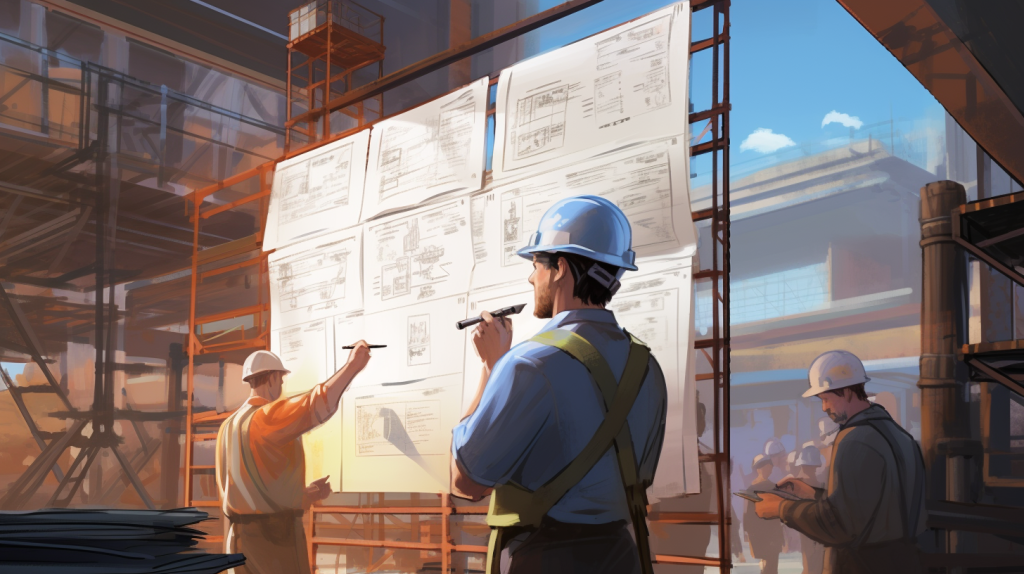
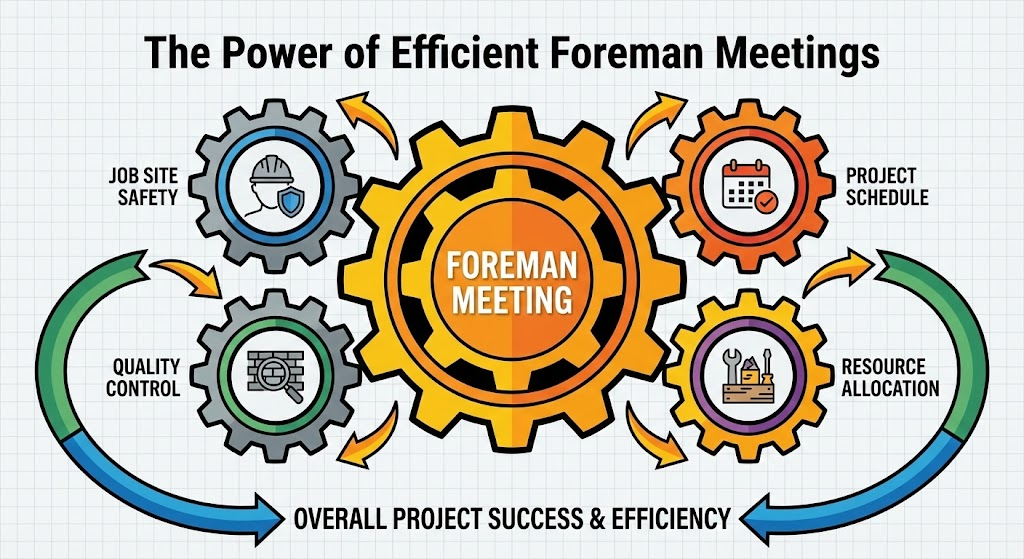
Foreman meetings serve as a pivotal communication channel in construction projects. These meetings bring together key team members, including foremen, supervisors, subcontractors, and other stakeholders, to discuss project updates, address issues, and align on priorities. Efficient foreman meetings empower construction professionals to share critical information, make informed decisions, and maintain effective project coordination. By optimizing the structure and approach of these meetings, you can unlock the full potential of your team and drive project success.
Preparing an Agenda for Productive Meetings
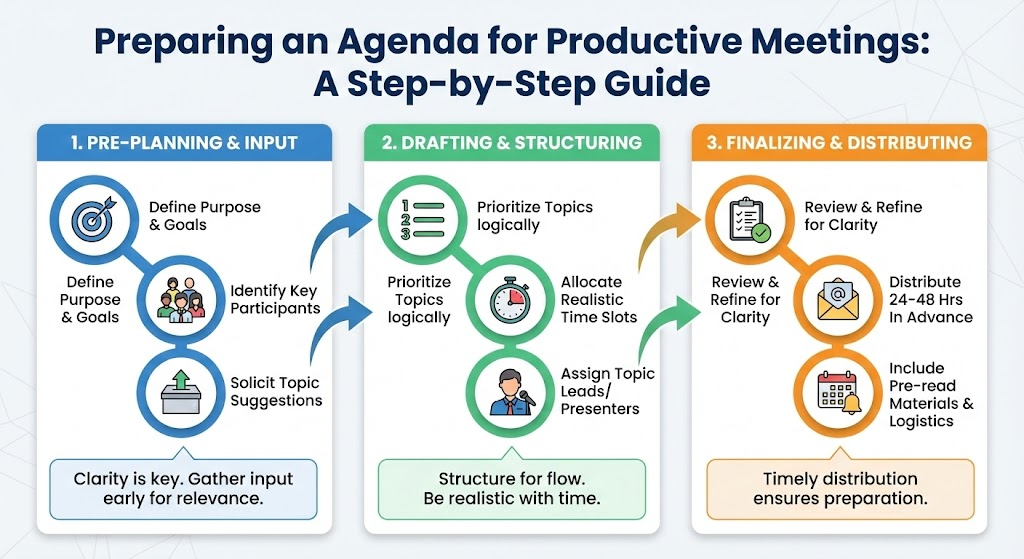
The foundation of an efficient foreman meeting lies in careful planning and preparation. Creating a well-defined agenda is a crucial step in ensuring that meetings stay focused and productive. The agenda should include key discussion topics, project updates, safety reminders, upcoming milestones, and any pressing issues that need to be addressed. By providing a clear outline of the meeting’s objectives, participants can come prepared, engage in meaningful discussions, and make the most of their time together.
Wintana A. | Field Engineer
“During our recent Project Risk Assessment, upper management was really impressed with how StruxHub was improving material handling, crane use time, and safety procedures for getting vendors in and out of the site.”
Setting Clear Meeting Objectives and Expectations
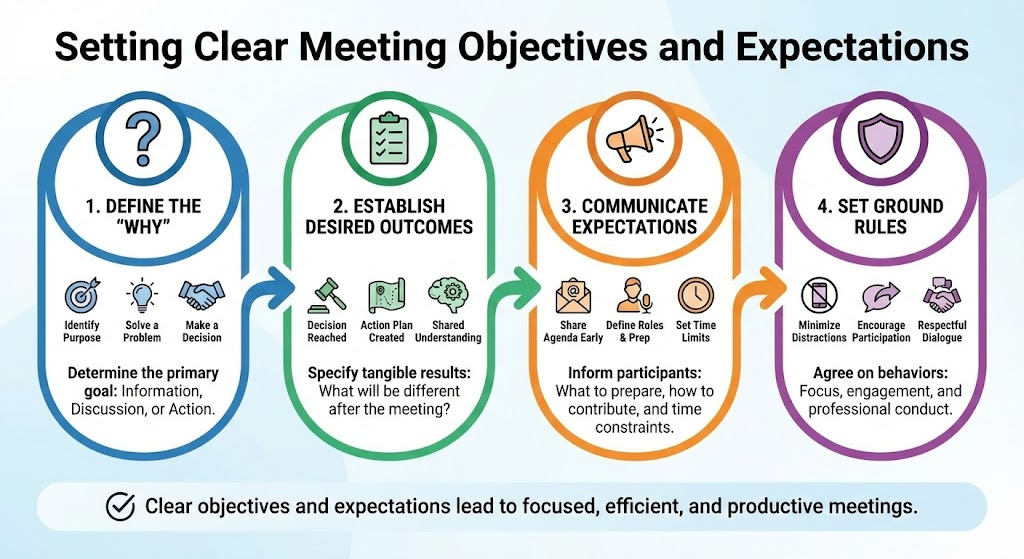
Clearly defining the objectives and expectations for each foreman meeting is essential for maintaining efficiency. Communicate the purpose of the meeting to all participants in advance, highlighting the specific outcomes that need to be achieved. Whether it’s reviewing project progress, identifying potential bottlenecks, or assigning tasks, ensuring that everyone is aligned on the meeting’s objectives sets the stage for focused and productive discussions.
Encouraging Active Participation and Collaboration
Efficient foreman meetings thrive on active participation and collaboration among team members. Encourage open communication, create a safe space for sharing ideas and concerns, and actively seek input from all attendees. Foster a culture of collaboration where everyone’s opinions are valued and respected. By promoting active engagement, you can tap into the collective expertise of your team and generate innovative solutions to challenges.
Streamlining Meeting Processes and Time Management
To maintain efficiency, it is important to streamline meeting processes and manage time effectively. Start and end meetings on time, adhering to the agenda and allocating sufficient time to each agenda item. Assign a designated facilitator to keep discussions on track, manage speaking turns, and ensure that all participants have an opportunity to contribute. Embrace technology by utilizing project management software or collaboration tools to streamline document sharing, note-taking, and action item tracking during the meeting.
Documenting Meeting Minutes and Action Items
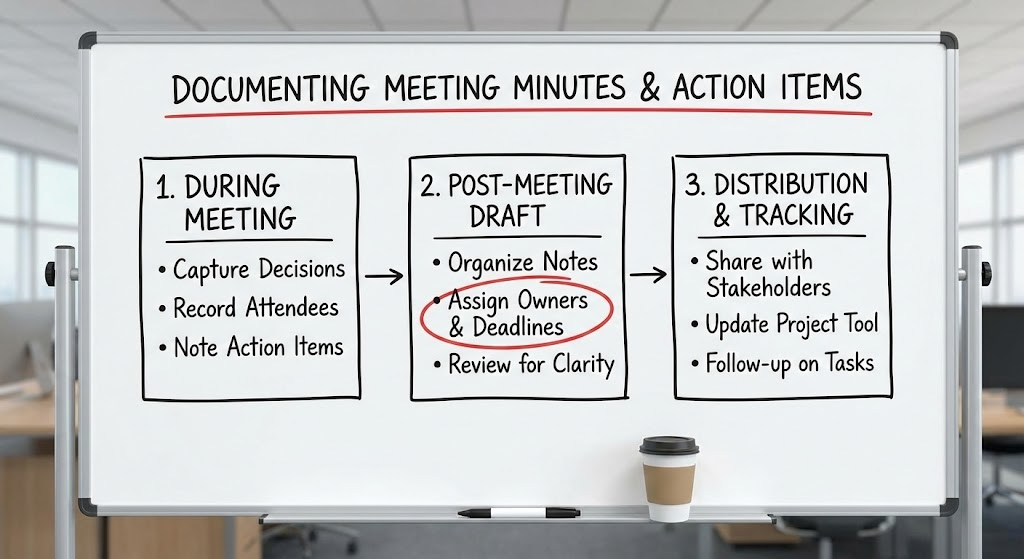
Accurate documentation of meeting minutes and action items is crucial for accountability and follow-up. Assign a dedicated individual to record the meeting minutes, capturing key discussions, decisions, and action items. Share the minutes promptly with all participants and stakeholders to ensure everyone is on the same page. Clearly assign responsibilities for action items, set deadlines, and monitor progress in subsequent meetings. By maintaining a record of meeting outcomes and tracking action items, you establish a culture of accountability and drive results.
Conducting efficient foreman meetings is a fundamental element of successful construction project management. By implementing the strategies outlined in this guide, including preparing a well-defined agenda, setting clear objectives, encouraging active participation, streamlining meeting processes, and documenting minutes and action items, you can lead productive meetings that drive project efficiency and foster a collaborative work environment. Embrace the power of efficient foreman meetings and witness the positive impact on your construction projects, team morale, and overall project success.
How to Resolve Inter-Trade Conflicts Before They Hit the Field?
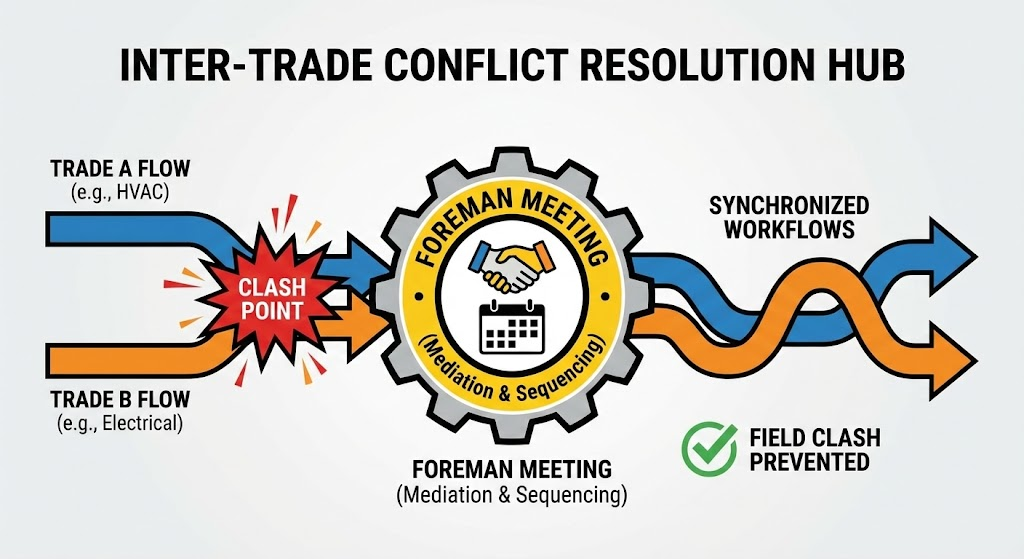
The foreman meeting is the ideal arena for a preemptive strike against trade stacking and spatial clashes. Don’t wait for the conduit to hit the ductwork in the field; that’s an expensive fix. Use the meeting to review the 3-week look-ahead with site plans or BIM models visible on a screen.
When a potential conflict is identified—for example, the electricians need access to a wall on Tuesday that the drywallers are scheduled to close up on Monday—the superintendent must act as a mediator, not just a dictator. Instead of immediately assigning blame or forcing a solution, ask the foremen: “What is the critical path here? How can we sequence this so you both can proceed efficiently?” If the resolution is too complex for a quick fix, don’t let it hijack the entire meeting. Mark it as an “offline breakout session” immediately following the main meeting for only the affected parties. This keeps the main meeting moving while ensuring the conflict gets the focused attention it needs.
How to Turn Foreman Meetings from a ‘Complaint Session’ into a ‘Planning Session’?
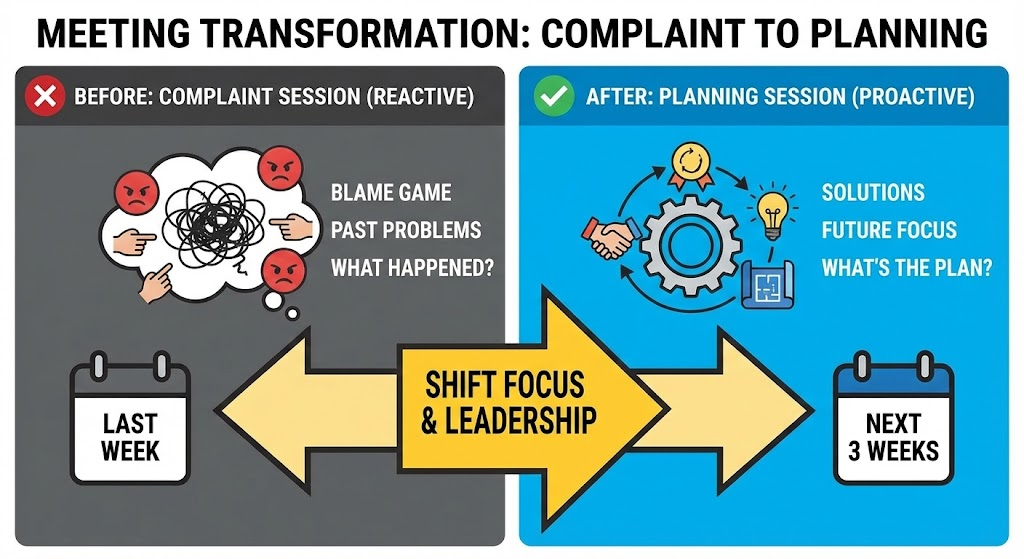
A common pitfall is for foreman meetings to devolve into a backward-looking gripe session where trades list everything that went wrong last week. While it’s important to learn from mistakes, the primary focus must be on the future. To shift this dynamic, the superintendent must firmly steer the conversation toward the “3-Week Look-Ahead.”
Instead of asking “What happened?”, ask “What is your plan for next week, and what do you need from others to achieve it?” Implement a strict “no-blame” rule; focus on the process failure, not the person. Encourage foremen to come prepared not just with problems, but with proposed solutions. This simple shift in framing transforms the meeting from a reactive review of history into a proactive strategy session that builds momentum for the weeks to come.
How to Ensure Action Items Don’t Fall Through the Cracks After the Meeting?
The most productive meeting is useless if the agreed-upon actions evaporate the moment everyone leaves the trailer. The solution is a rigorous, inescapable follow-up process. The minutes, including a clear “Action Items” table with an assigned owner and due date for each task, must be distributed within 24 hours—no exceptions.
But sending an email isn’t enough. The superintendent must actively track these items. Start the next meeting by reviewing the previous week’s action items. Ask each owner for a status update: “Complete,” “In Progress,” or “Blocked.” This public accountability is a powerful motivator. For critical tasks, use a visible jobsite scoreboard or a digital project management tool that sends automated reminders. This relentless follow-through sends a clear message: commitments made in the meeting are commitments that must be kept in the field.
How Can StruxHub Help?
StruxHub is a construction project management software that helps you manage projects from start to finish. It offers features like task management, document management, and communication tools. StruxHub can help you save time and money, improve communication, collaboration, and decision-making.
To learn more about how StruxHub can streamline your construction management processes, request a demo today. By completing our form, you’ll hear from our team soon to discuss how StruxHub can help you:
- Schedule construction material deliveries with your trades
- Coordinate construction site resources and on-site logistics
- Digitize work permits and inspection forms
- Communicate and track P6 and Excel schedules
- Broadcast announcements to all construction workers
Don’t miss out on the opportunity to optimize your construction management processes with StruxHub. Sign up for a free demo today.
StruxHub
Experience the power of StruxHub today and witness firsthand how it can revolutionize your construction operations.
FAQ
How often should foreman meetings be held to maintain peak site efficiency?
The frequency of foreman meetings often depends on the project’s complexity and current phase, but consistency is the absolute golden rule. For most high-stakes commercial projects, a weekly “Big Room” meeting is the standard for deep-dive coordination and long-term scheduling. However, many top-tier superintendents supplement this with daily “Daily Stand-ups” or huddles lasting no more than 15 minutes.
These daily touchpoints ensure that the immediate 24-hour plan is clear and that any overnight hurdles—like weather shifts or equipment failures—are addressed before crews hit the deck. If you only meet once a week, a single delay on Tuesday can snowball into a massive scheduling disaster by Friday. By blending a comprehensive weekly strategy session with agile daily check-ins, you create a communication rhythm that catches errors in real-time, keeps safety at the forefront, and ensures every trade is perfectly synced.
What are the essential items that every foreman meeting agenda must include?
A productive meeting lives or dies by its agenda. To keep the team focused, every meeting should start with a Safety Moment, reinforcing that life-safety precedes production. Following safety, the core of the meeting should revolve around the Look-Ahead Schedule—typically a 3-week window. This allows trades to see exactly when they need to be in a specific area and identify potential “hand-off” conflicts before they happen.
Another critical item is Constraint Removal. This is where foremen voice what is stopping them from working, such as missing RFIs, delayed submittals, or blocked access. Finally, include a section for Quality Control and Housekeeping. Addressing site cleanliness and installation standards weekly prevents a massive “punch-list” headache at the end of the project. By keeping these four pillars—Safety, Schedule, Constraints, and Quality—as permanent fixtures on your agenda, you eliminate “fluff” and ensure every minute spent in the trailer adds value to the field.
How can a superintendent encourage active participation and accountability from all trades?
It’s common for foreman meetings to turn into a lecture where the superintendent talks and everyone else stares at their boots. To break this, transition to a pull-planning or collaborative mindset. Ask specific, open-ended questions like, “Electrical, how does the mechanical ductwork in Zone B affect your conduit run next Tuesday?” This forces trades to talk to each other, not just to you.
Another effective tactic is to rotate the “lead” role or have different foremen report on their specific milestones. When a foreman has to stand up and explain why a task wasn’t completed, the peer-to-peer accountability is far more motivating than a reprimand from the super. Clear expectations regarding attendance and prep work are also vital. If foremen know they are expected to arrive with their 3-week look-ahead already filled out, they come mentally prepared to contribute rather than just “listening in.” This creates a culture of ownership rather than mere compliance.
Why is the documentation of meeting minutes and action items so critical in construction?
In the fast-paced world of construction, “he said, she said” is a recipe for litigation and budget overruns. Documenting minutes isn’t just a clerical task; it is a legal and operational safeguard. Minutes provide a historical record of decisions made, which is vital when settling claims regarding delays or scope changes later. More importantly, for daily operations, minutes serve as the Project’s Memory.
When you clearly list Action Items with a specific “Owner” and a “Due Date,” you eliminate ambiguity. A foreman might forget a verbal request made in a noisy trailer, but a written action item in a distributed report is hard to ignore. This documentation also keeps stakeholders like Project Managers and Owners in the loop without them needing to be physically present. Using digital tools to distribute these minutes within 24 hours ensures that the “marching orders” are fresh and that everyone is working from the same sheet of music.
How should inter-trade conflicts and scheduling overlaps be resolved during the meeting?
Conflicts are inevitable when multiple trades are squeezed into the same square footage. The foreman meeting is the designated “neutral ground” to resolve these. When a conflict arises, the superintendent should act as a mediator rather than a dictator. Focus on the Project Logic: ask which task is the “critical path” driver. If the drywall can’t start until the piping is pressure-tested, the logic dictates the pipe-fitters get priority.
If a disagreement becomes too granular or heated, take it “off-line.” Don’t let two trades hijack the meeting for 20 minutes while thirty other people wait. Assign the two foremen to meet at the specific site location immediately after the meeting to hash out the physical constraints. This respects everyone’s time while ensuring the issue is resolved on the day it was identified. Successful resolution comes from focusing on the “Best for Project” outcome rather than “Best for Trade,” fostering a team-first environment.