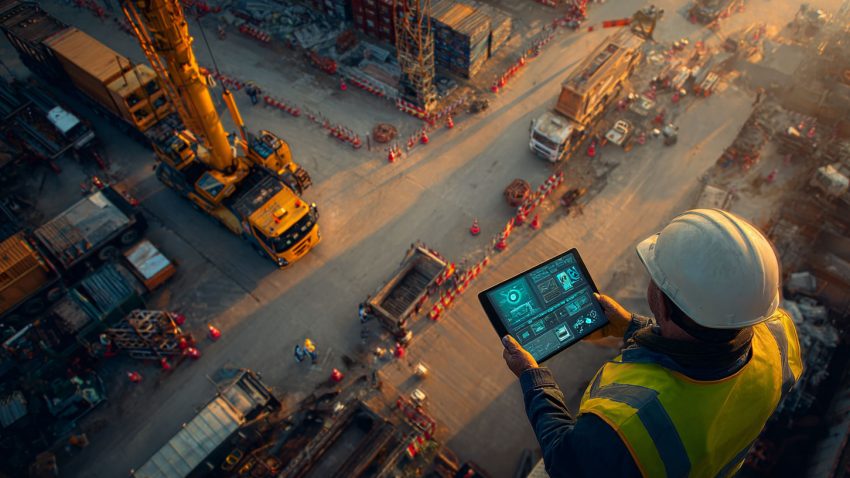
What Does Heavy Equipment Tracking Look Like on a Modern Jobsite?
Table of Contents:
What Is Heavy Equipment Tracking on a Modern Construction Site?
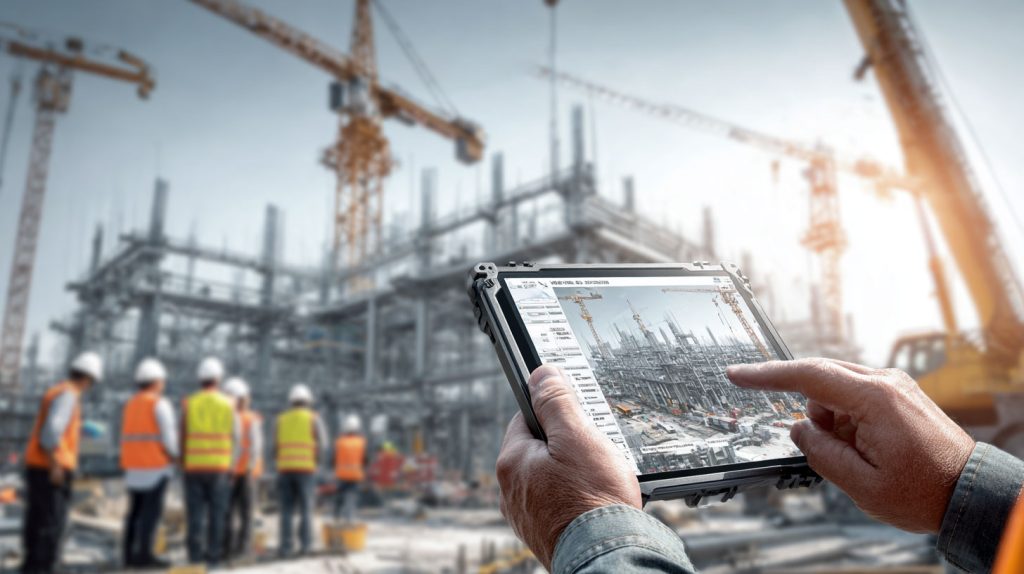
Heavy equipment tracking on a modern jobsite is no longer just about knowing where a machine is parked. Today, it means having real-time visibility into location, usage, status, availability, maintenance needs, and jobsite assignment. Contractors use GPS tracking, telematics, mobile dashboards, and smart fleet management tools to understand how every major piece of equipment is supporting daily construction operations.
On a busy construction site, equipment moves constantly. Excavators shift between work zones, lifts get reassigned to different crews, loaders support deliveries, and generators may be moved as temporary power needs change. Without a tracking system, superintendents often rely on phone calls, whiteboards, spreadsheets, or memory to understand where equipment is located and whether it is being used.
Modern tracking gives field teams a live equipment picture. A superintendent can open a dashboard and see which equipment is active, idle, available, assigned, due for maintenance, or missing from the expected jobsite zone. This helps teams plan the day more accurately and avoid delays caused by unavailable machines.
Top Features
- Real-time GPS location tracking for equipment across the jobsite
- Telematics data showing engine hours, idle time, and machine health
- Mobile dashboards for superintendents, project managers, and fleet teams
Top Benefits
- Reduces confusion about where equipment is located
- Improves daily coordination between crews and supervisors
- Helps prevent idle time, duplicate rentals, and equipment delays
Best Practices
- Track every high-value machine from the start of the project
- Review equipment status during daily planning meetings
- Connect equipment tracking with crew schedules and delivery plans
Q&A
Q: What does heavy equipment tracking show on a jobsite?
A: It shows where equipment is located, whether it is being used, and whether it is available for upcoming work.
Q: Why do superintendents need real-time equipment visibility?
A: They need to know if the right machine is in the right place before assigning crews or approving work.
Q: Is equipment tracking only useful for large contractors?
A: No. Small and mid-sized contractors can also reduce wasted time, rental costs, and misplaced equipment with better tracking.
How GPS Tracking Helps Contractors See Where Equipment Is Located
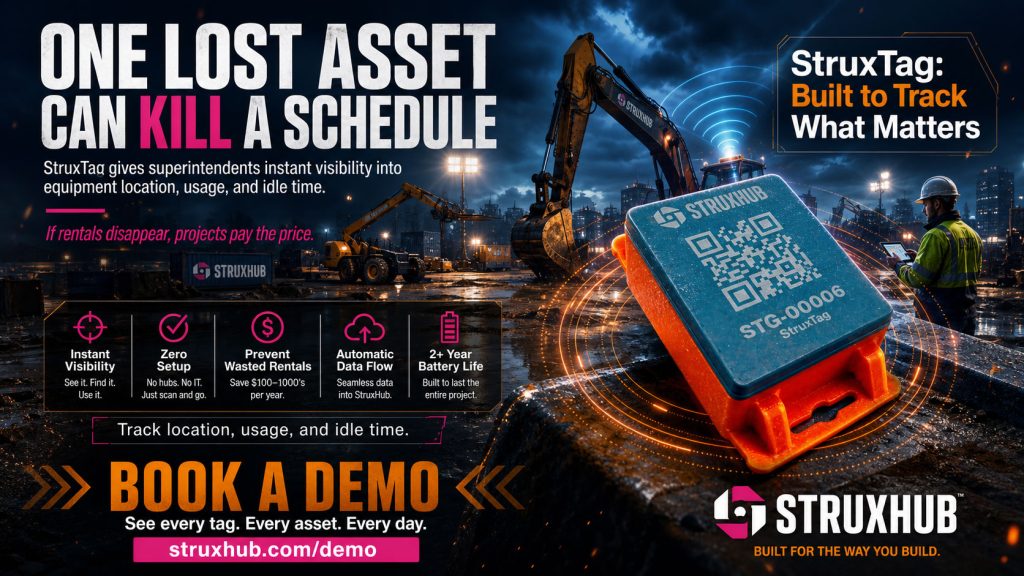
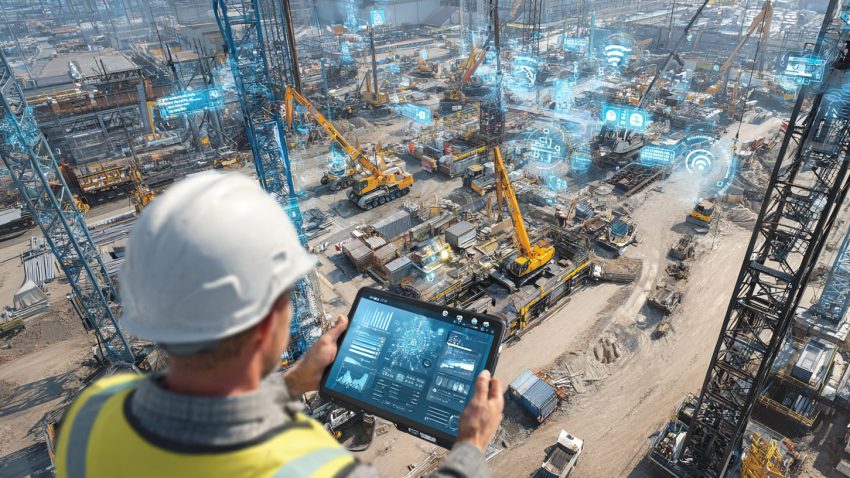
GPS tracking is one of the most visible parts of modern heavy equipment tracking. Each machine is equipped with a tracker that reports its location to a digital map. This allows contractors to see where excavators, loaders, lifts, trucks, generators, and other assets are located across the jobsite or across multiple projects.
This matters because construction equipment is constantly moving. A boom lift may be used by one trade in the morning and another in the afternoon. A skid steer may be moved from a laydown area to a loading zone. A generator may be relocated to support temporary lighting or field office power. Without GPS tracking, finding equipment can become a daily time drain.
With GPS visibility, superintendents can confirm whether equipment is already onsite, where it is staged, and whether it has moved unexpectedly. Fleet managers can also see if equipment has left a project, entered a storage yard, or crossed a geofence after hours.
GPS tracking also supports better decision-making across multiple jobsites. If one project needs a machine and another has one sitting idle, the operations team can transfer equipment instead of renting another unit.
Top Features
- Live map views showing equipment location by jobsite or zone
- Geofence alerts for unauthorized movement or after-hours activity
- Multi-project visibility for contractors managing several jobsites
Top Benefits
- Helps teams find equipment faster
- Reduces unnecessary rentals caused by poor visibility
- Improves security and accountability for high-value assets
Best Practices
- Set geofences around jobsites, yards, and restricted zones
- Review equipment locations before approving new rentals
- Use GPS data to coordinate transfers between projects
Q&A
Q: How does GPS tracking help on a construction site?
A: It helps teams quickly locate equipment and confirm whether machines are where they are supposed to be.
Q: Can GPS tracking help prevent theft?
A: Yes. If equipment moves outside an approved area, alerts can notify the team quickly.
Q: Can GPS tracking work across multiple jobsites?
A: Yes. Contractors can monitor equipment across active jobsites, storage yards, and staging areas from one system.
How Telematics Shows Equipment Usage, Idle Time, and Machine Health
Telematics gives contractors a deeper view of equipment performance beyond location tracking. While GPS shows where equipment is, telematics shows how that equipment is being used. This includes engine hours, idle time, fuel use, diagnostic fault codes, utilization rates, and maintenance alerts.
This data is valuable because equipment may appear available on a map but still be underused, overused, or in poor condition. A loader may be onsite but sitting idle most of the day. An excavator may be running longer than expected because of poor sequencing. A lift may show fault codes that need service before the next major task.
For superintendents and fleet managers, telematics helps connect field operations with actual equipment performance. Instead of guessing whether a machine is being used efficiently, they can review data. This helps improve scheduling, reduce fuel waste, and prevent breakdowns.
Telematics also supports preventive maintenance. By tracking engine hours and diagnostic data, contractors can schedule service before a machine fails. This keeps crews productive and reduces the risk of unexpected downtime.
Top Features
- Engine hour tracking for accurate maintenance scheduling
- Idle time reporting to identify equipment waste
- Fault code alerts for early detection of mechanical issues
Top Benefits
- Improves fleet utilization with real usage data
- Reduces downtime through proactive maintenance alerts
- Helps contractors control fuel costs and equipment waste
Best Practices
- Review idle time reports weekly with project teams
- Use engine-hour data to schedule preventive maintenance
- Track fault code alerts before they become major breakdowns
Q&A
Q: What is telematics in construction equipment tracking?
A: Telematics collects performance data from equipment, including runtime, fuel use, idle time, and maintenance signals.
Q: Why is idle time important to track?
A: Idle time wastes fuel, increases wear, and often shows that equipment is not being used efficiently.
Q: How does telematics help reduce downtime?
A: It alerts teams to maintenance needs before equipment breaks down and delays work.
How Contractors Use Heavy Equipment Tracking to Improve Jobsite Productivity
Modern construction sites move fast, and productivity depends heavily on having the right equipment available at the right time. Heavy equipment tracking helps contractors improve jobsite efficiency by giving superintendents live visibility into machine availability, utilization, and movement throughout the day.
Without tracking systems, crews often lose time searching for equipment, waiting for machines to become available, or dealing with overlapping requests between trades. A superintendent may believe a skid steer is free, only to discover another crew is already using it on the opposite side of the site. These small inefficiencies add up quickly across large projects.
Tracking systems eliminate much of this uncertainty. Superintendents can see which machines are active, idle, or scheduled for upcoming tasks. This allows teams to allocate resources more efficiently and reduce downtime between operations.
Heavy equipment tracking also improves coordination during high-pressure phases such as concrete pours, crane picks, utility installation, or material handling. Knowing where machines are and how they are being used helps teams maintain workflow continuity and reduce schedule interruptions.
Top Features
- Real-time equipment availability tracking
- Utilization dashboards showing active and idle assets
- Jobsite zone tracking for better operational coordination
Top Benefits
- Improves daily crew productivity and equipment availability
- Reduces wasted time searching for equipment
- Helps superintendents coordinate equipment across multiple crews
Best Practices
- Review fleet utilization during morning planning meetings
- Monitor idle assets and reassign equipment quickly
- Coordinate equipment schedules alongside manpower planning
Q&A
Q: How does equipment tracking improve jobsite productivity?
A: It helps crews access the right equipment faster and reduces downtime caused by missing or unavailable machines.
Q: Why is visibility important for superintendents?
A: Superintendents need to understand equipment availability before assigning work or approving schedules.
Q: Can tracking reduce unnecessary rentals?
A: Yes. Better visibility often reveals that existing equipment can be reassigned instead of renting additional machines.
StruxHub
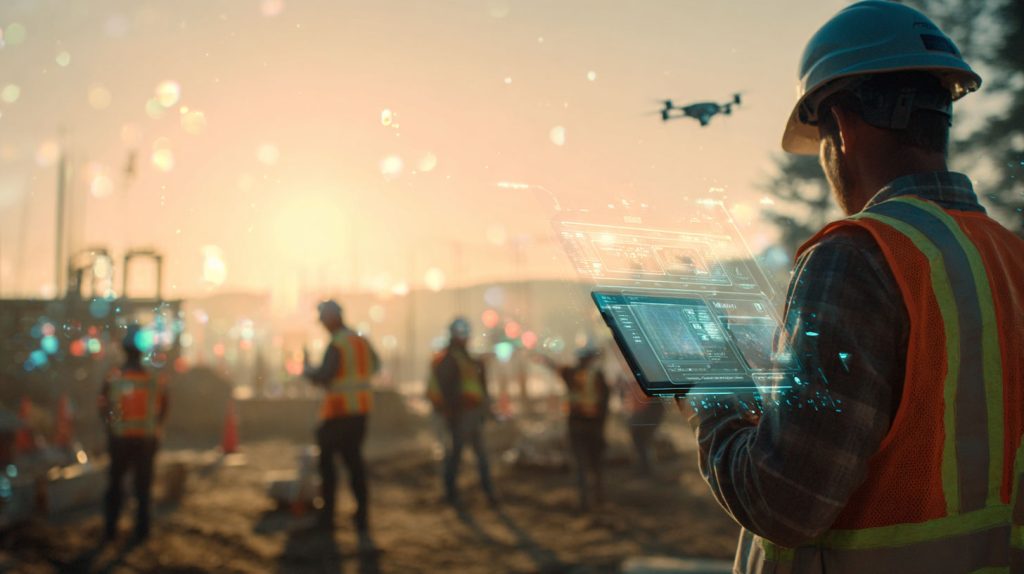
Experience the power of StruxHub today and witness firsthand how it can revolutionize your construction operations.
How Contractors Prevent Equipment Theft and Unauthorized Usage
Heavy equipment theft is a growing problem across construction projects because machinery is expensive, mobile, and often left onsite overnight. Modern tracking systems help contractors reduce this risk through GPS visibility, geofencing, and automated alerts.
Geofencing allows contractors to create virtual boundaries around jobsites, storage yards, or approved operating zones. If a machine moves outside the boundary after hours, the system immediately sends an alert to project leadership or fleet managers.
Tracking systems also improve accountability for authorized usage. Contractors can monitor when machines are started, how long they operate, and whether they are being used outside approved schedules. This helps reduce unauthorized operation and unnecessary wear on equipment.
For large fleets, theft prevention is only part of the value. Equipment tracking also helps contractors confirm where machines are located during audits, transfers, or emergency relocations.
Top Features
- GPS-based geofence monitoring
- Automated after-hours movement alerts
- Equipment usage and movement history logs
Top Benefits
- Helps prevent equipment theft and unauthorized movement
- Improves accountability for machine usage
- Protects expensive fleet assets across multiple jobsites
Best Practices
- Set geofences around every active project and storage yard
- Configure automatic alerts for nighttime movement
- Review movement logs regularly for unusual activity
Q&A
Q: How does geofencing work in equipment tracking?
A: It creates virtual boundaries around approved areas and alerts teams when equipment leaves those zones.
Q: Can GPS tracking recover stolen equipment?
A: Yes. GPS visibility helps contractors locate and recover assets much faster.
Q: Does tracking help reduce unauthorized usage?
A: Absolutely. Usage logs show when machines are operated and for how long.
StruxHub: Revolutionizing Project Management in Large Commercial Construction
How AI and Smart Data Improve Heavy Equipment Fleet Management
AI is transforming heavy equipment tracking by turning raw fleet data into operational intelligence. Instead of only tracking location, modern systems analyze usage patterns, idle time, maintenance trends, and machine performance to help contractors make smarter decisions.
AI can identify underused assets, detect inefficient operator behavior, and predict maintenance needs before equipment fails. This allows contractors to improve utilization while reducing downtime and repair costs.
For example, if a machine shows excessive idle time across multiple projects, the system may recommend reassigning it or reducing rentals. If engine diagnostics reveal recurring fault codes, maintenance can be scheduled before the machine breaks down onsite.
AI also improves forecasting. Contractors can analyze fleet demand trends to determine whether additional equipment is actually needed or whether existing assets can be redistributed more effectively.
Top Features
- AI-powered utilization analysis
- Predictive maintenance alerts
- Smart reporting for fuel use, idle time, and fleet efficiency
Top Benefits
- Helps contractors make data-driven fleet decisions
- Reduces downtime through predictive maintenance
- Improves overall fleet utilization and operational planning
Best Practices
- Review AI fleet reports weekly with operations teams
- Use predictive maintenance alerts proactively
- Compare utilization trends across projects and regions
Q&A
Q: How does AI improve equipment tracking?
A: AI analyzes usage and performance data to identify inefficiencies and predict problems before they happen.
Q: Can AI reduce equipment downtime?
A: Yes. Predictive maintenance alerts help contractors repair machines before failures occur.
Q: Why is smart data valuable for fleet management?
A: It helps contractors optimize equipment usage, reduce waste, and improve operational efficiency.
How StruxHub Helps Contractors Manage Heavy Equipment Tracking and Fleet Coordination
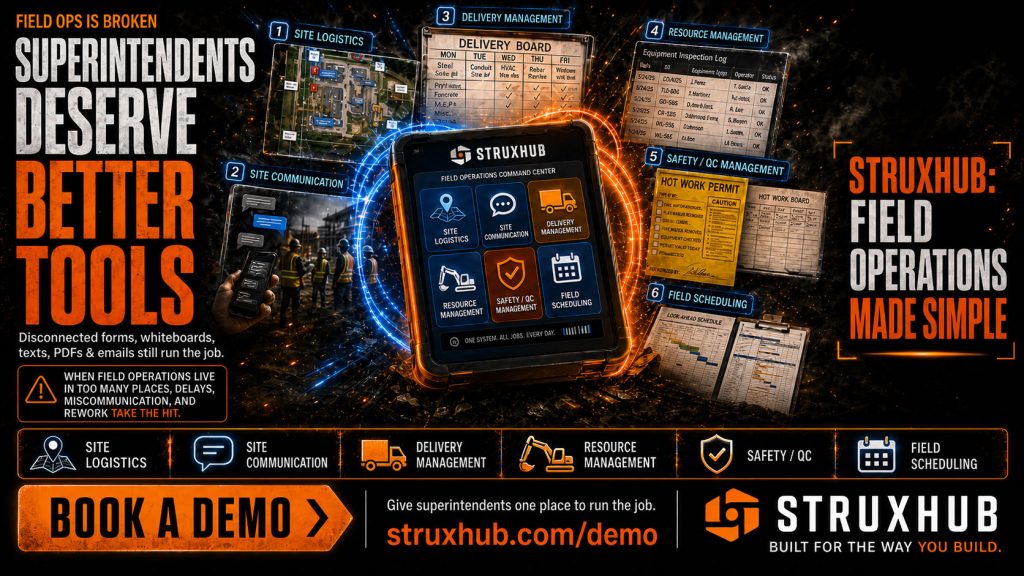
StruxHub helps contractors centralize heavy equipment tracking and fleet coordination within the broader jobsite workflow. Instead of managing equipment through disconnected spreadsheets, GPS apps, or phone calls, teams can connect equipment visibility directly to scheduling, logistics, and field coordination.
Superintendents can use StruxHub to understand:
- where equipment is located
- which crews are assigned to it
- whether machines are active or idle
- whether upcoming work has the required equipment available
This improves planning and helps reduce delays caused by unavailable or misplaced equipment.
StruxHub also supports coordination across multiple jobsites. Operations teams can compare equipment availability between projects and make faster transfer decisions without relying on manual tracking.
By connecting fleet management with scheduling and field operations, StruxHub helps contractors create a more organized and data-driven approach to heavy equipment coordination.
Top Features
- Centralized equipment visibility across projects
- Integration between fleet coordination and scheduling workflows
- Real-time dashboards for equipment availability and utilization
Top Benefits
- Improves communication between field teams and operations managers
- Reduces delays caused by missing or underutilized equipment
- Helps contractors manage fleets more efficiently at scale
Best Practices
- Use StruxHub as the central source of truth for fleet visibility
- Coordinate equipment planning alongside manpower scheduling
- Review utilization dashboards regularly to optimize fleet deployment
Q&A
Q: How does StruxHub help with heavy equipment coordination?
A: It centralizes equipment visibility and connects fleet management with project workflows.
Q: Can StruxHub improve equipment utilization?
A: Yes. Better visibility helps contractors reduce idle equipment and optimize deployment.
Q: Why is centralized fleet visibility important?
A: It helps superintendents and operations teams make faster, more informed decisions across all jobsites.
Frequently Asked Questions About Heavy Equipment Tracking on Modern Jobsites
What does heavy equipment tracking look like on a modern construction site?
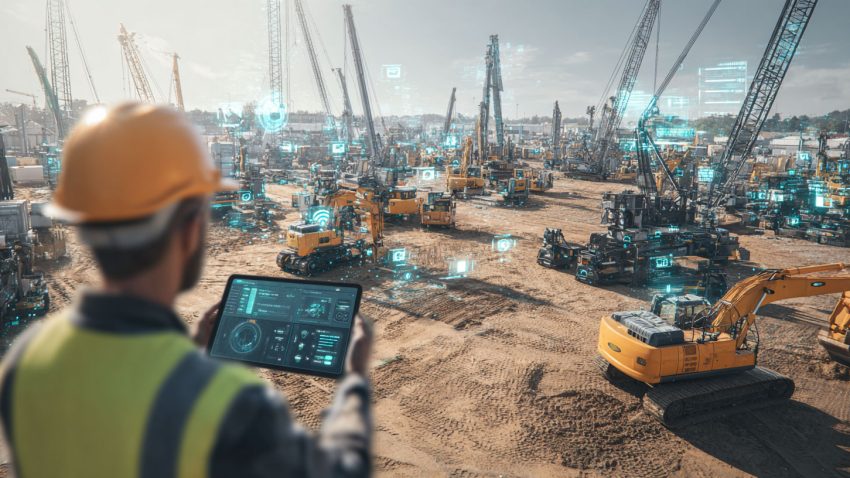
Heavy equipment tracking on a modern construction site usually looks like a live digital dashboard that shows where equipment is located, whether it is active or idle, and whether it is available for upcoming work. Instead of relying on phone calls, whiteboards, or spreadsheets, superintendents and operations teams can open a system and see equipment status in real time.
On the jobsite, this may include GPS pins showing equipment locations, telematics data showing engine hours and fuel usage, and alerts for maintenance issues or unauthorized movement. A superintendent can quickly confirm whether a lift is available, whether an excavator has moved to the right zone, or whether a loader is sitting idle instead of supporting material handling.
Modern tracking also connects equipment data with broader construction workflows. When equipment availability is tied to schedules, deliveries, crew assignments, and daily reports, teams can make better decisions faster. This helps prevent downtime, unnecessary rentals, and coordination delays.
In short, modern heavy equipment tracking gives contractors a live operational view of their fleet, helping crews stay productive and helping superintendents manage the jobsite with greater confidence.
How does GPS tracking help contractors manage heavy equipment?
GPS tracking helps contractors locate heavy equipment quickly and accurately across jobsites, storage yards, and staging areas. Each tracked machine reports its position to a digital map, allowing superintendents and fleet managers to see where assets are located in real time.
This visibility is valuable because construction equipment frequently moves between work zones and projects. Without GPS tracking, teams may waste time looking for machines or renting equipment they already own but cannot locate. GPS data helps reduce that confusion.
GPS tracking also supports theft prevention. Contractors can create geofences around jobsites or yards. If a machine leaves the approved area after hours, the system can send an alert so the team can respond quickly.
For multi-site contractors, GPS tracking improves fleet sharing. If one project has an idle machine and another project needs it, operations teams can coordinate transfers more efficiently. This helps reduce rental costs and improves overall fleet utilization.
GPS tracking is not just about location. It is a foundation for smarter fleet coordination, better security, and more productive jobsite planning.
What is the difference between GPS tracking and telematics?
GPS tracking and telematics are closely related, but they provide different types of information. GPS tracking shows where equipment is located. Telematics shows how equipment is performing and being used.
GPS answers location-based questions such as where the machine is, whether it is inside the jobsite, and whether it moved after hours. This is useful for equipment visibility, logistics, theft prevention, and multi-site coordination.
Telematics goes deeper into machine performance. It can track engine hours, idle time, fuel consumption, diagnostic fault codes, maintenance status, and utilization patterns. This helps contractors understand whether equipment is being used efficiently and whether maintenance is needed.
For example, GPS may show that an excavator is onsite. Telematics may show that the excavator has been idling for three hours, is consuming excessive fuel, or has a fault code that requires service. Together, these insights give contractors a more complete picture of equipment health and productivity.
The best equipment tracking strategy combines both GPS and telematics so superintendents, fleet managers, and operations teams can manage location, usage, maintenance, and cost from one connected workflow.
How can heavy equipment tracking reduce jobsite delays and equipment downtime?
Heavy equipment tracking reduces delays by helping teams confirm that the right equipment is available before work begins. When superintendents can see equipment location and status in real time, they can plan crews, deliveries, and work zones with greater accuracy.
Many jobsite delays happen because equipment is missing, being used by another crew, sitting idle in the wrong location, or out of service unexpectedly. Tracking systems reduce these surprises by making equipment status visible before the schedule is affected.
Telematics also helps reduce downtime by monitoring engine hours, fault codes, and service intervals. Instead of waiting for a machine to break down, contractors can schedule preventive maintenance based on actual usage. This keeps equipment healthier and reduces the risk of emergency repairs.
Heavy equipment tracking also helps teams identify underused machines. If equipment is sitting idle on one project, it can be reassigned to another site before a new rental is approved. This improves utilization and reduces unnecessary costs.
By connecting equipment visibility with scheduling and field coordination, contractors can keep work moving with fewer interruptions and better control over fleet operations.
How does StruxHub help superintendents manage heavy equipment tracking?
StruxHub helps superintendents manage heavy equipment tracking by connecting fleet visibility with the daily jobsite coordination workflow. Instead of treating equipment tracking as a separate system, StruxHub helps teams align equipment status with schedules, crew assignments, deliveries, and field operations.
For superintendents, this means they can see which equipment is assigned to the jobsite, where machines are located, and whether the required assets are available for upcoming tasks. This helps reduce delays caused by missing, idle, or unavailable equipment.
StruxHub also improves communication between field crews, project managers, and operations teams. When everyone works from the same equipment visibility data, decisions about transfers, rentals, and equipment assignments become faster and more accurate.
For contractors managing multiple jobsites, StruxHub supports better fleet coordination at scale. Teams can compare availability across projects, reduce unnecessary rentals, and identify underused assets before they become a cost problem.
In short, StruxHub helps turn equipment tracking from basic asset location into a practical field coordination tool. It gives superintendents the visibility they need to keep crews productive, equipment accountable, and projects moving.
 May 28, 2026
 May 28, 2026